
围绕“AI 应用落地如何算清成本与回报”,拆解企业如何把知识库、智能客服、销售自动化、SOP 助手、模型 API 和行业 Agent 做成可上线、可维护、可复用的业务系统。
先从真实业务问题开始
企业引入 AI 不应只停留在模型、概念或演示效果上。更可靠的路径,是先明确岗位、流程、数据来源、权限边界和目标指标,再判断应该用知识库、智能客服、销售自动化、SOP 助手、模型 API 还是行业专用 Agent 来解决问题。
把方案做成可上线系统
模伐方块科技会把需求拆成可执行的交付清单:资料整理、知识库结构、提示词与工作流、接口接入、权限设置、日志记录、人工复核和培训文档。这样项目不是一次性 Demo,而是能被团队每天使用、持续迭代的业务系统。
适合优先落地的场景
- 行业知识库与智能客服,解决资料查询、售前问答、售后工单和内部支持。
- 销售与营销自动化,覆盖获客、跟进、话术、转化和复盘。
- 企业内部 SOP 与培训助手,把老员工经验、制度文档和操作流程沉淀下来。
- 报表、合同、邮件和会议纪要自动化,减少重复白领工作。
- 制造、电商、法律、医疗、教育、金融等行业专用 Agent,用于质检、选品、合规、风控和数据分析。
交付后继续运营
AI 项目上线后,需要持续看使用率、准确率、响应速度、人工接管、成本和业务结果。我们会帮助客户建立复盘机制,让有效流程沉淀为可复用模块,再逐步进入订阅式软件能力和长期维护。
下一步
如果你正在评估「AI 应用落地如何算清成本与回报」相关方向,可以从一次业务诊断开始。带上你的业务流程、客户资料、现有工具和希望优化的指标,我们会判断最适合先落地的 AI 应用路径。
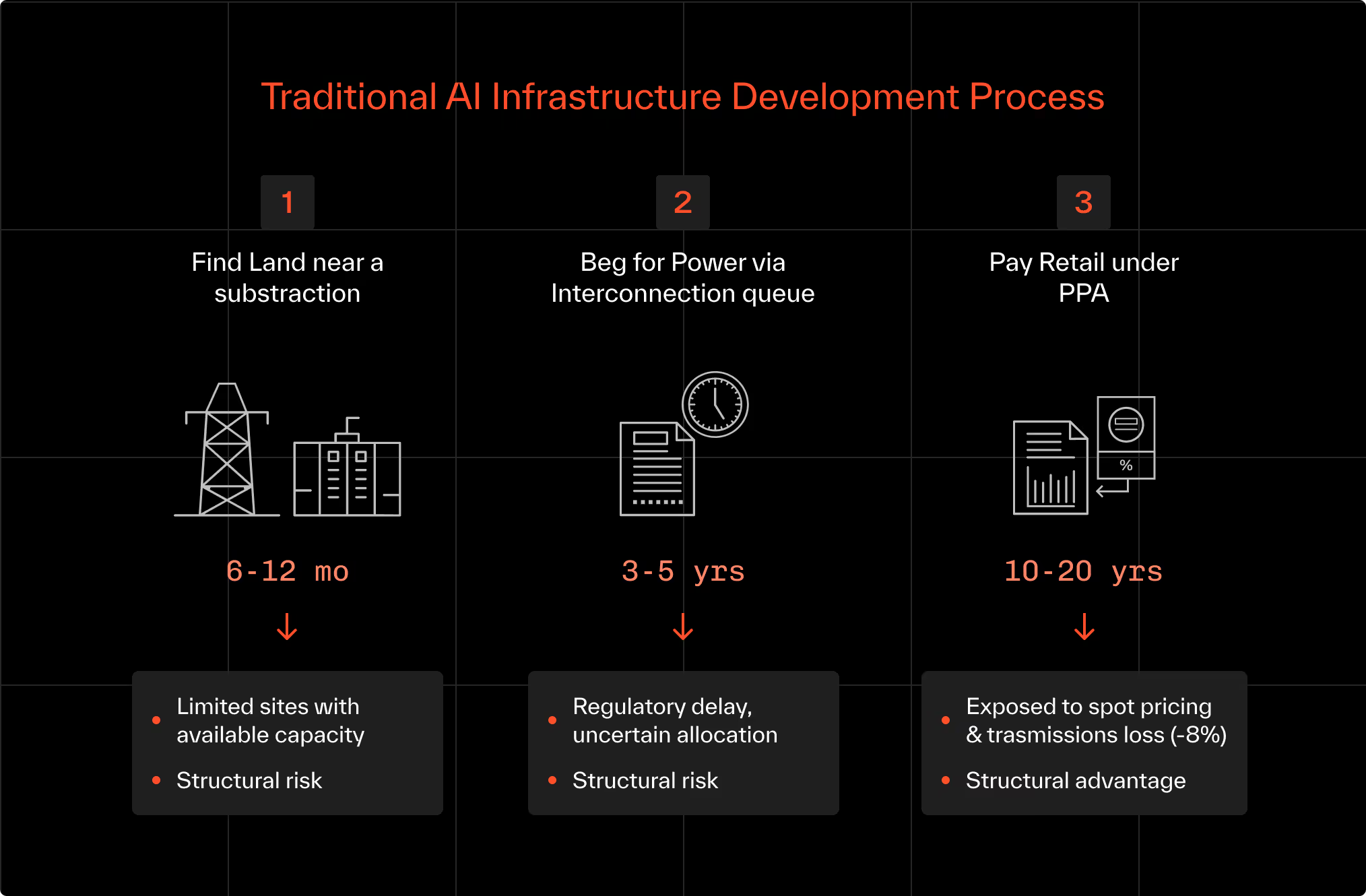
Financial Anatomy of the Grid-Tenant Model
A tenant cloud therefore pays 60–70 % more than the raw generation cost of power.
When power is 30–40 % of AI operating expense, this is terminally inefficient.
More critically, the timeline is incompatible with AI growth curves.
企业 AI Agent demand doubles roughly every 5-6 months; grid capacity expansion moves in 10-year planning cycles.
The end result is simple, a widening structural gap between power availability and model ambition.
The Behind-the-Meter Model (The Radiant Way)
Radiant inverts the logic. We operate as an energy owner, not a tenant.
Through Brookfield, we build and own the generation first - then integrate compute directly at the source.
Process Flow:
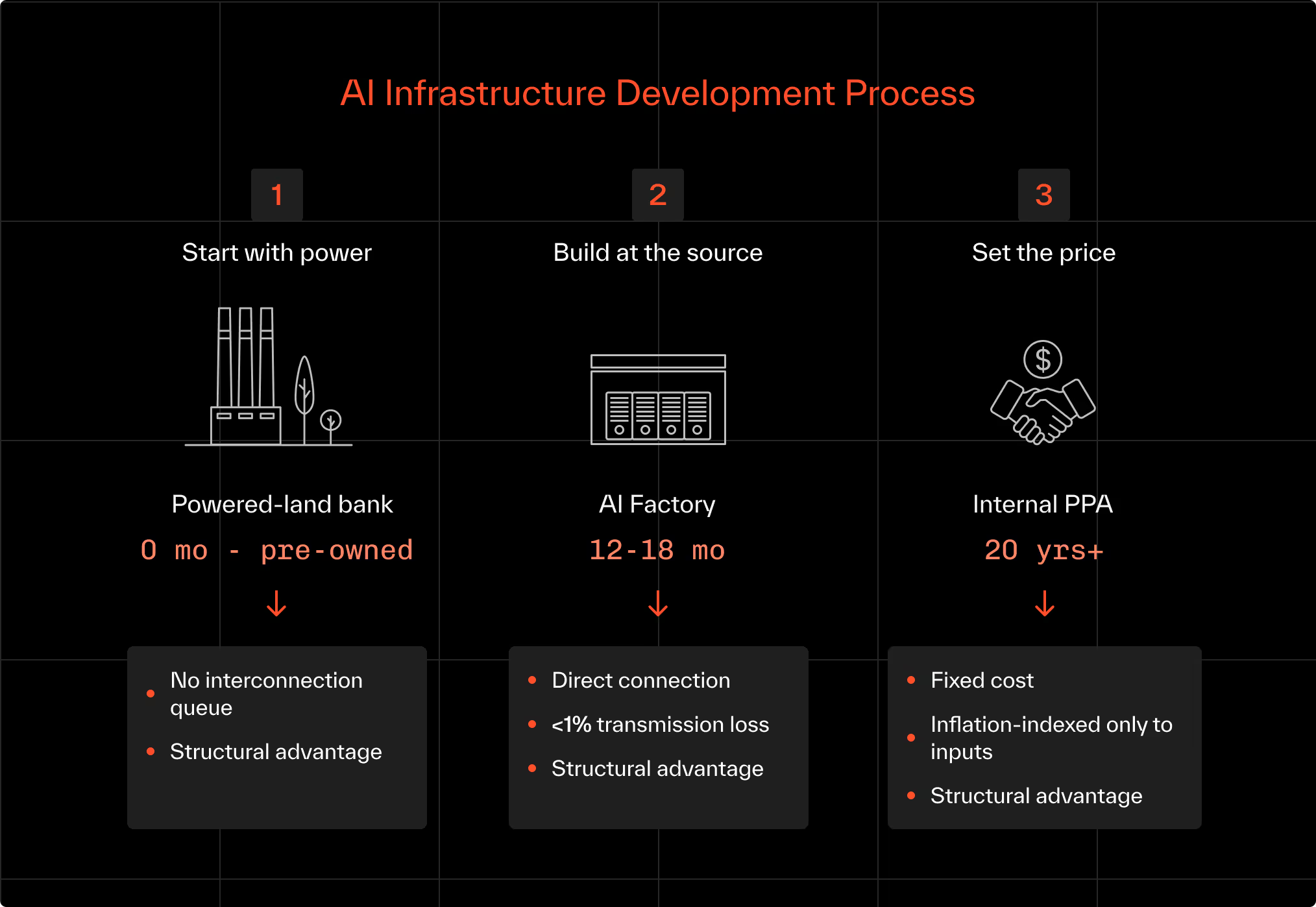
The difference is not incremental efficiency; it is systemic leverage.
When power is internalized, compute economics compound.
The Three Structural Advantages
Velocity — Time to Intelligence
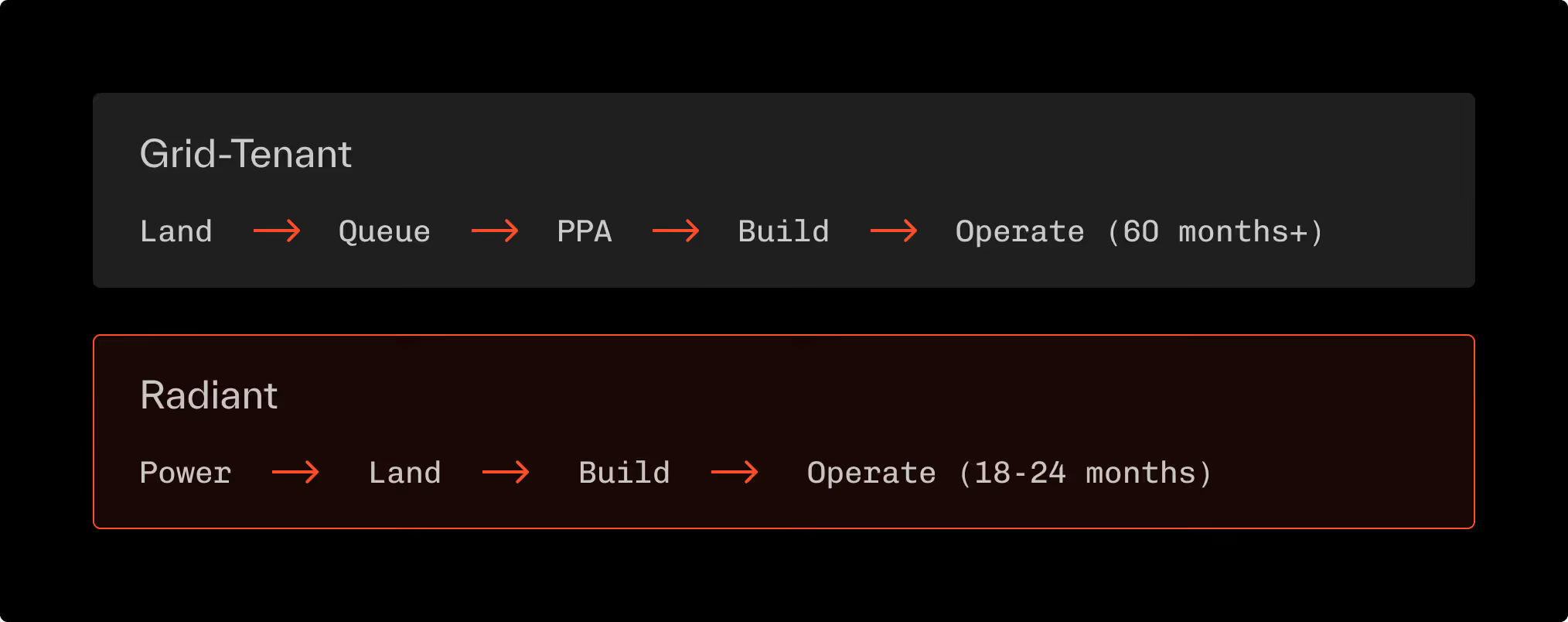
By starting with generation, we bypass the interconnection queue entirely.
The development clock runs in parallel instead of series.
Deployment Timeline Comparison
Cost — The Structural Advantage
Owning power removes the grid’s 60–70 % markup and hedging costs.
It converts variable Opex into predictable Capex.
Delivered Power Cost (illustrative)
Result: ≈ 50 % reduction in delivered power cost, directly lowering cost-per-training-run and enabling fixed-price compute contracts that competitors cannot match.
Reliability — Utility-Grade Availability
Public grids are exposed to congestion, weather, and geopolitical risk.
By owning generation and micro-grid infrastructure, Radiant achieves Tier IV equivalent reliability (four-nines reliability) at the facility level.
Exhibit 5 | Sources of Failure Eliminated
An AI Factory that controls its own power behaves like a power plant: always on, always priced.
The Architectural Shift
AI Factories are no longer just datacenters with GPUs.
They are industrial consumers of energy that must be designed as extensions of generation.
Exhibit 6 | Energy-First Architecture
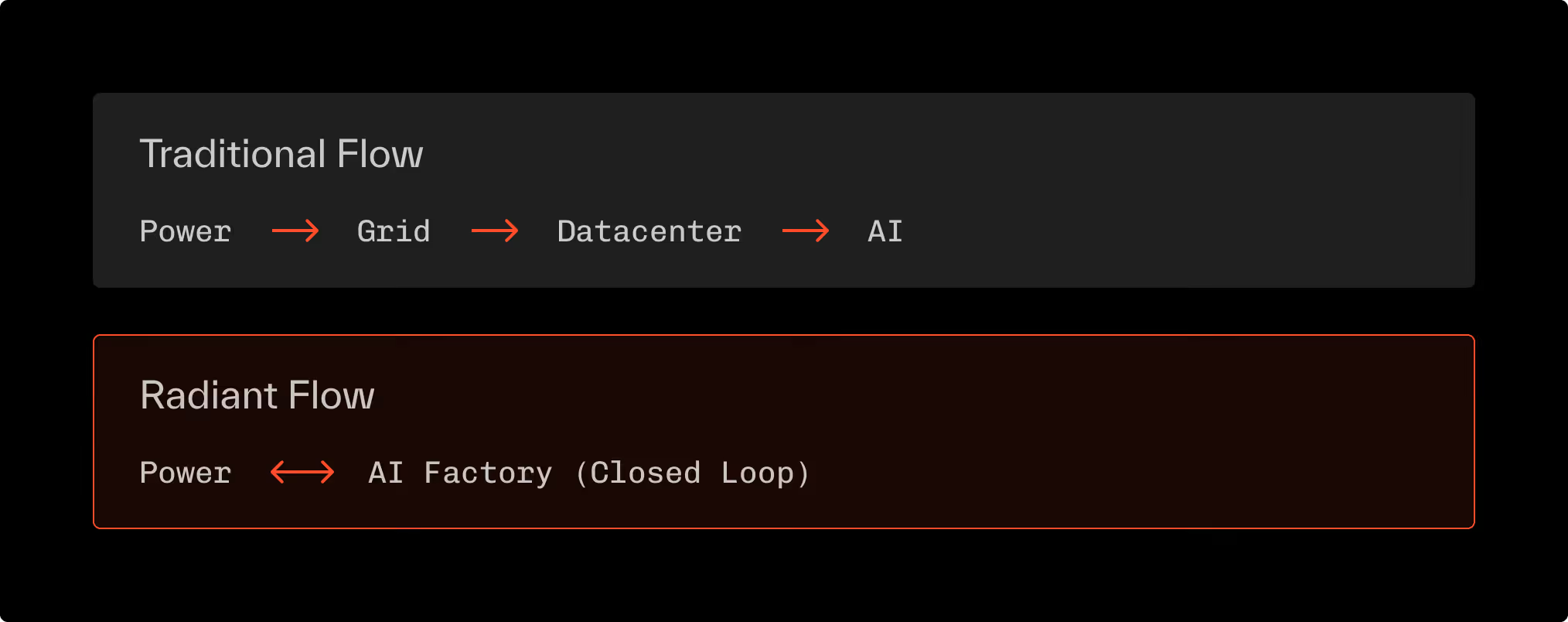
When compute meets generation, latency, cost, and carbon all collapse.
Every watt travels meters, not miles. Every dollar of Capex produces both electricity and intelligence.
Conclusion
The future of AI infrastructure belongs to those who treat power as the primary design variable—not an external dependency. By moving compute to power, we move AI from scarcity to abundance, from volatility to utility.